
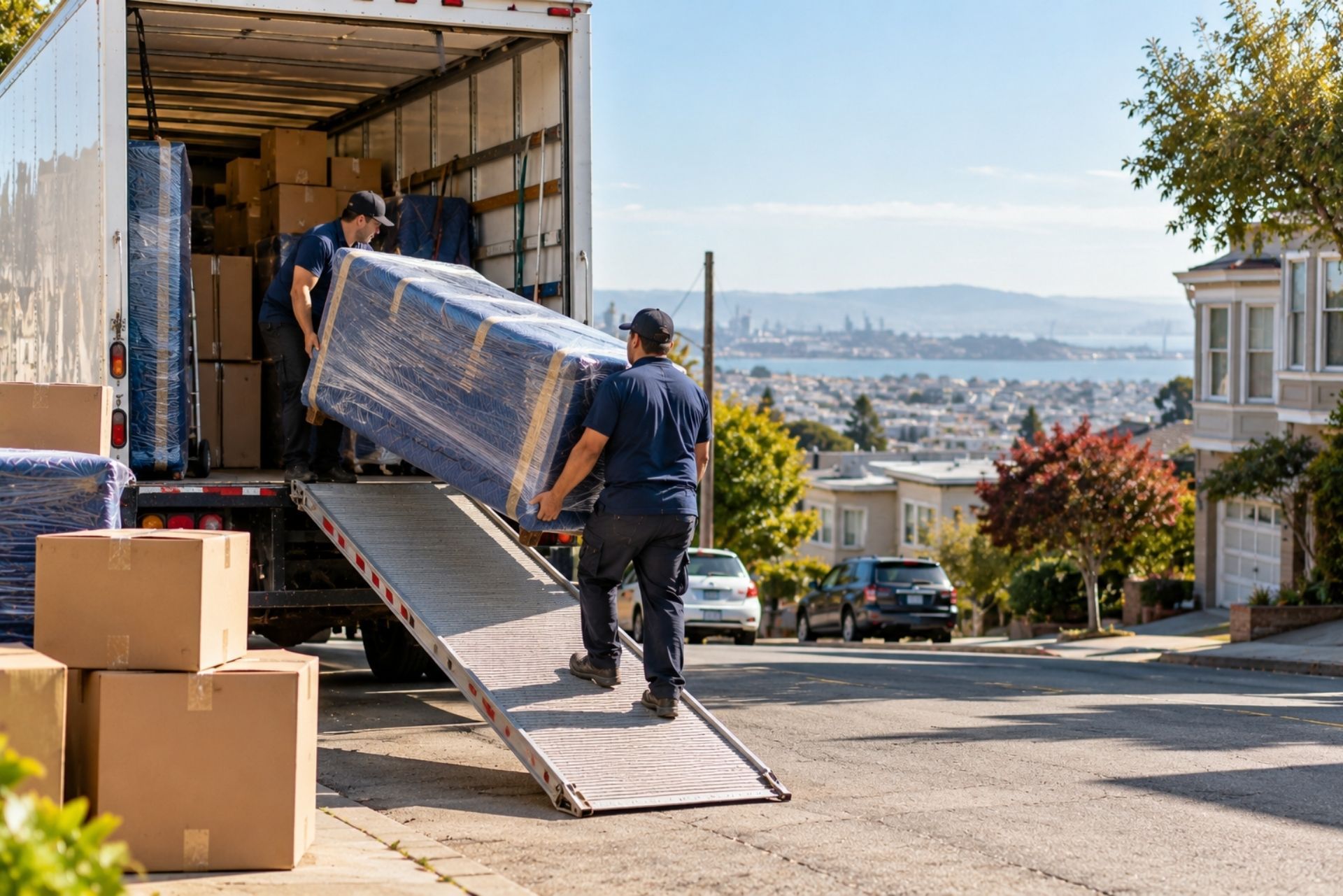
Picture a two-truck crew pulling out of a Rockridge driveway with a client's grand piano, a crate of heirloom china, and a vintage mid-century credenza. One sharp brake on the Bay Bridge approach, a strap gives way, and the credenza punches through the piano's lid. The customer wants full replacement value. Your helper tweaked his back catching the falling box. And the adjuster's first question is whether your cargo policy even covers "improperly secured loads."
That's one bad afternoon, and it touches three different policies. Insurance for an Oakland moving and storage company isn't one product. It's a stack of coverages that have to line up with state permit rules, East Bay traffic, waterfront warehouse exposures, and one of the most expensive workers' comp classes in California.
Below, we walk through how that stack fits together: cargo legal liability, commercial auto, warehouse storage,
permit requirements, workers' compensation, and what all of it realistically costs in 2026. The goal is to help you spot the gaps before a claim finds them for you.
The Risk Landscape for Oakland Moving and Storage Companies
Oakland movers deal with a risk profile that looks nothing like a mover in Fresno or Redding. The streets are narrow in neighborhoods like Temescal and Grand Lake, parking is tight, and the hills mean long carries down steep stairs. Add I-880 congestion, port truck traffic, and frequent runs across the bridges to San Francisco, and your drivers spend a lot of time in exactly the conditions that produce fender benders and rear-end claims.
The claims we see most often from Bay Area movers fall into a few buckets:
- Cargo damage: scratched hardwood furniture, cracked TVs, broken glass tabletops, and water-damaged boxes from loading in the rain
- Property damage at the residence: gouged floors, dented door frames, scraped elevator interiors in high-rise condos
- Vehicle incidents: low-speed collisions while backing into tight driveways, sideswipes on surface streets
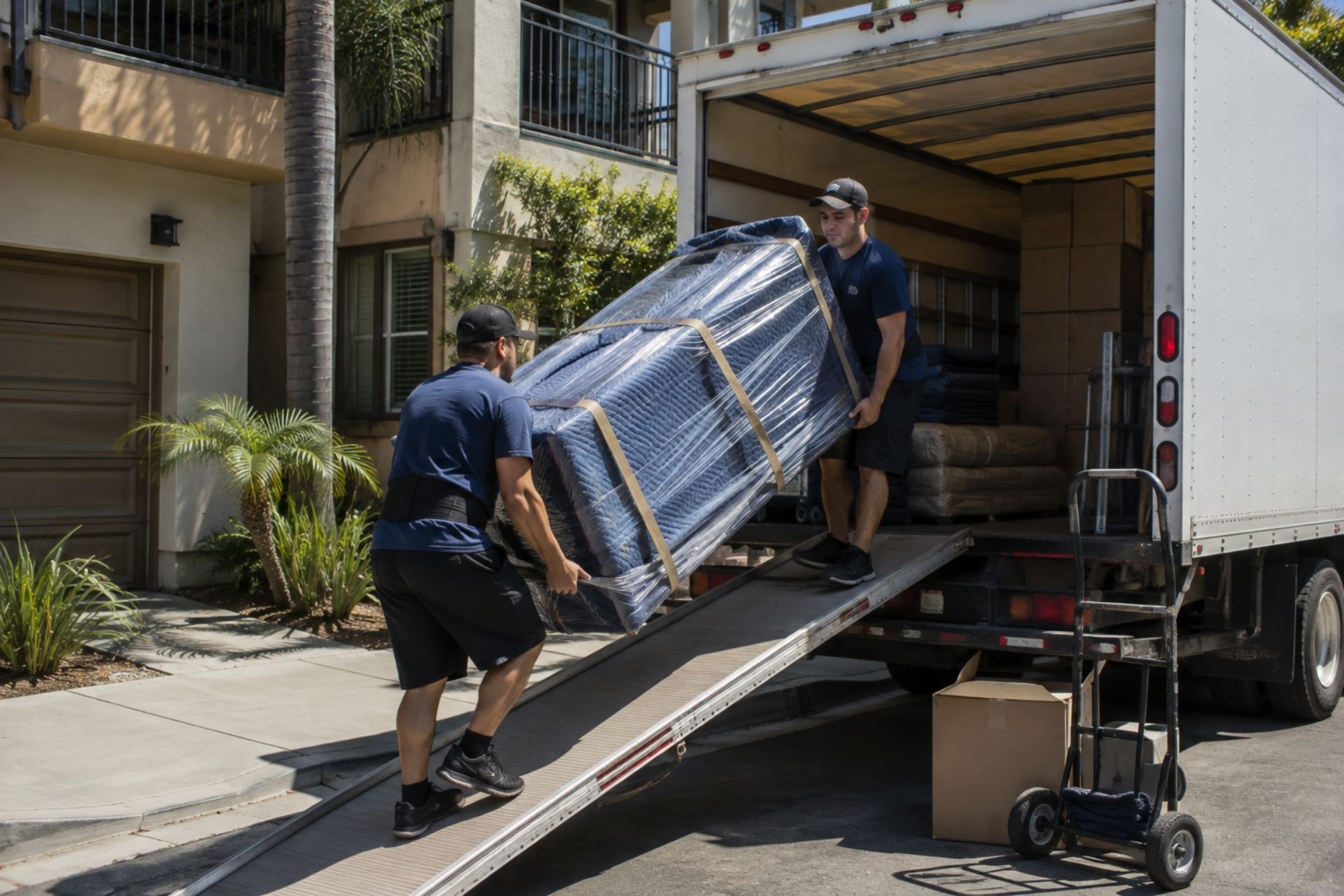
- Employee injuries: back strains, knee injuries on stairs, crushed fingers during dolly work
- Theft: break-ins at storage facilities or overnight thefts from loaded trucks
Customers here also tend to own higher-value goods, which raises the stakes on every claim. A single damaged piece of designer furniture can exceed what a whole truckload of goods would have been worth fifteen years ago.

By: Mark Raby
Chief Executive Officer at Champion Risk & Insurance Services
Meeting CPUC Licensing and Insurance Requirements
Many Oakland operators still talk about "getting their CPUC permit," but the regulatory picture has shifted. The Bureau of Household Goods and Services (BHGS) has replaced the CPUC as the primary regulator for intrastate household movers in California, and BHGS now issues the required Cal-T permits. If you're moving household goods within the state for compensation, that permit is non-negotiable.
The practical takeaway: your insurance is part of your licensing file. The regulator expects proof of specific coverages before issuing or renewing a permit, and a lapse in coverage can put your permit at risk. We've seen movers lose weeks of booked jobs because a carrier canceled a policy for nonpayment and the filing went dark.
Interstate moves are a separate track. If you cross state lines, federal registration and federal cargo and liability filings come into play on top of state rules.
Mandatory CPUC Coverage Limits for Household Goods Carriers
Required limits for household goods carriers typically cover public liability and property damage, cargo, and workers' compensation if you have employees. The exact dollar thresholds are set by the regulator and can change, so confirm current figures directly with BHGS before you bind a policy rather than relying on an old binder or a competitor's word.
One point that trips people up: the state's general auto minimums are not your target. California raised its
minimum auto liability limits to 30/60/15 effective January 1, 2025, under Senate Bill 1107. That's a floor for ordinary drivers. A loaded 26-foot box truck causing a multi-car pileup on I-580 can blow past those numbers in minutes, which is why permitted movers carry far higher commercial limits.
Protecting Assets with Commercial Auto and Cargo Legal Liability
Commercial auto covers your trucks, vans, and trailers, plus the liability your drivers create on the road. Personal auto policies exclude business use like hauling customer goods for pay, so a crew member using a personal pickup for a quick job is an uninsured exposure waiting to happen. Make sure every vehicle that touches customer property is scheduled on the commercial policy, and add hired and non-owned auto coverage for rentals and employee vehicles.
Driver quality drives your auto premium more than almost anything else. Underwriters pull motor vehicle records on every driver, and two or three bad records can raise rates for the whole fleet. Champion Risk often helps moving clients set up written driver standards, MVR review schedules, and training programs, because a documented safety program is one of the few levers that actually moves an underwriter's pricing.
Cargo legal liability (sometimes called motor truck cargo for movers) protects the customer's goods while they're in your care, custody, and control. It responds when you're legally liable for loss or damage during loading, transit, and unloading.
Cargo Legal Liability vs. Full Value Protection
These two get confused constantly, and the confusion costs movers money. Cargo legal liability is your insurance. Valuation options like Released Value or Full Value Protection are what you offer the customer on the bill of lading, and they set how much you owe if something breaks.
Released Value is minimal coverage priced by weight, so a lightweight but expensive item is barely protected. Full Value Protection obligates you to repair, replace, or pay current market value. If you sell Full Value Protection, your cargo policy limits and terms need to back that promise. Otherwise you're personally on the hook for the difference.
Documentation is your best defense either way. Have crews note pre-existing damage on the bill of lading, take photos, and shoot timestamped video of high-value items before wrapping. It shuts down a lot of fraudulent "it was perfect before you touched it" claims.
Warehouse Legal Liability and Storage Coverage
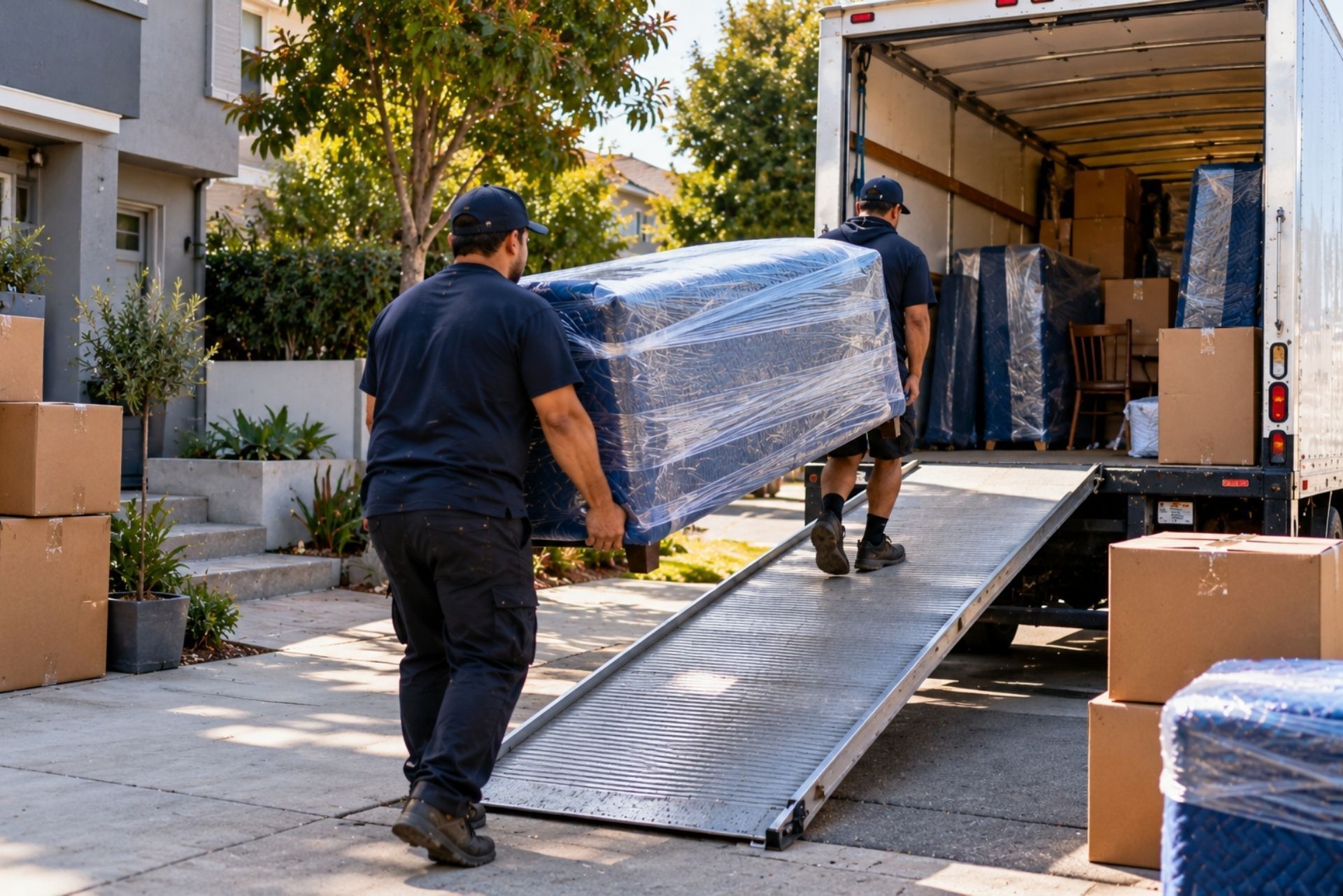
Storage changes your exposure in a big way. Once goods sit in your warehouse, your cargo policy usually stops responding, and warehouse legal liability takes over. It covers your legal liability for customer goods damaged or lost while stored: fire, sprinkler leaks, roof failures, theft, and mishandling during warehouse moves.
Storage-in-Transit (SIT) deserves special attention. SIT is short-term storage when a customer's closing date or new home isn't ready, typically 30 to 90 days. Movers sometimes forget that goods in SIT may be covered under different terms than permanent storage, so confirm your policy wording handles both.
A few warehouse gaps we flag on Oakland accounts:
- Mysterious disappearance exclusions: some policies won't pay for missing items without evidence of a break-in
- Mold and humidity: Bay fog and older West Oakland buildings can mean moisture claims that are often excluded
- Earthquake: rarely included by default, and a serious concern near the Hayward Fault
- Building and contents: your own racking, forklifts, and pads need separate property coverage
If you own or lease structures in hillside or wildland-adjacent areas, new state rules may affect your property insurability. California's
"Zone Zero" hardening laws (AB 888 and SB 429) require wildfire risk mitigation within five feet of a structure to strengthen insurance access. Clearing combustible material around a satellite facility in the hills is worth doing before renewal.
Essential Employee Protections: Workers' Compensation and General Liability
California requires workers' comp for any business with employees, and there's no small-crew exemption. For movers, it's often the single largest line in the insurance budget, because the work involves constant lifting, twisting, and stair carries. A torn rotator cuff can generate medical bills, temporary disability payments, and potentially a permanent disability rating that stretches out for years.
General liability covers a different kind of harm: damage you cause to customer property that isn't the goods themselves, plus injuries to third parties. Think a gouged oak floor, a cracked marble entryway, a scraped elevator in a downtown condo building, or a customer tripping over a dolly. Many high-rise property managers in Oakland and San Francisco demand a certificate of insurance naming them as additional insured before your crew can even reserve the freight elevator.
An umbrella policy sits on top of both auto and general liability. Given Bay Area jury verdicts, most established movers should carry one.
Navigating Oakland's High-Risk Classification for Movers
Movers fall into workers' comp classification codes that rank among the costlier ones in the state, so getting the classification right matters. A common mistake: lumping office staff, estimators, and dispatchers into the moving labor class. Those roles usually qualify for much cheaper clerical or sales classes, but only if your payroll records separate them.
Your experience modification factor (X-Mod) also shapes pricing. One serious injury can push it above 1.0 for three years. Return-to-work programs, lifting training, and prompt claim reporting all help. The
California workers' comp rating bureau has pointed to rising system costs and early signs of higher charged rates, so controlling losses now protects you from compounding increases.
Here's how the main coverages split up responsibility. Use this to check whether your current program leaves a hole.
| Coverage | What It Protects | Common Gap |
|---|---|---|
| Commercial Auto | Your trucks and road liability | Unlisted drivers, rental trucks |
| Cargo Legal Liability | Customer goods in transit | Low limits vs. Full Value promises |
| Warehouse Legal Liability | Customer goods in storage | Mysterious disappearance, mold |
| General Liability | Property damage at homes, third-party injuries | Damage to goods being moved |
| Workers' Comp | Employee injuries | Misclassified payroll |
| Umbrella | Excess over auto and GL | Doesn't cover cargo |
Customers also ask about alternatives. Some buy third-party moving insurance, which can fill gaps beyond a mover's valuation. Homeowners and renters policies usually provide only limited coverage for belongings in transit, and the customer should keep coverage active at both addresses during the move. Standard credit card purchase protections typically exclude household moves, so customers shouldn't count on them.
Helping customers spot unlicensed operators also protects your reputation. Common red flags include unmarked vehicles, crews without uniforms, quotes far below market, and no local physical business address. Licensed, insured movers lose jobs to these outfits, and their customers often end up with no recourse after damage.
Factors Influencing Insurance Costs in the East Bay
Premiums for movers in Oakland vary widely, but large fleets feel the weight. Annual insurance costs for large Oakland-based moving fleets in 2026 often range between $95,000 and $120,000. Smaller operators pay less in total dollars, though rarely less per truck.
The biggest pricing drivers:
- Fleet size and vehicle values: more trucks, more exposure
- Driver records: violations and accidents on MVRs
- Payroll and classification: the main basis for workers' comp
- Loss history: three to five years of claims, reviewed closely
- Radius of operations: local, intrastate, or interstate
- Warehouse construction and security: sprinklers, alarms, cameras
- Cargo and storage limits: higher limits raise premiums
Market conditions add pressure you can't fully control. Rising system costs and social inflation have led to a projected 7 to 10% increase in commercial auto premiums for urban corridors like the Bay Area in 2026. Movers who show dashcam programs, telematics, and documented training typically land on the better end of carriers' rating ranges.
One thing to keep in mind: shopping on price alone backfires in this class. A cheap policy with a narrow cargo form or a theft exclusion can cost far more than the premium you saved.
Common Questions About Oakland Moving Insurance
Do I still need a CPUC permit to move households in Oakland? Household movers now get their Cal-T permit through the Bureau of Household Goods and Services, which took over from the CPUC. Check BHGS for current filing and insurance requirements.
What's the difference between cargo coverage and the valuation I offer customers? Cargo legal liability is the insurance that pays when you're liable. Valuation, like Full Value Protection, is the promise you make to the customer, and your cargo limits should support it.
Does my cargo policy cover theft from a parked truck overnight? Sometimes, but many policies limit or exclude theft from unattended vehicles. Read the conditions on locks, alarms, and attended parking before assuming you're covered.
How do deductibles work on moving claims? Most cargo and warehouse policies carry a per-claim deductible. Higher deductibles lower premiums, but only choose one you could comfortably pay several times a year.
Can I put my office staff in a cheaper workers' comp class? Usually, yes, if their duties are strictly clerical and payroll records track them separately. Auditors will reclassify them if they help on jobs.
Is earthquake damage to stored goods covered? Typically not unless you add it. For warehouses near the Hayward Fault, it's worth pricing out.
The Bottom Line for Your Moving Business
Insuring a moving and storage operation in Oakland comes down to coordination. Your Cal-T permit filings, commercial auto, cargo and warehouse liability, workers' comp, and general liability each cover a slice of the risk, and the dangerous claims are the ones that fall between them. Get classification right, back your valuation promises with real limits, document goods before they move, and treat driver quality as a pricing tool.
Costs are climbing in 2026, but well-run fleets with clean records and visible safety programs still have negotiating power. Review your program every year, not just at renewal, especially after adding trucks or storage space.
If you'd like a second set of eyes on your coverage, Champion Risk works with moving and storage companies on policy structuring, risk audits, and driver training programs built around how movers actually operate. A fifteen-minute review now beats discovering an exclusion while a customer waits for a check.
About the Author:
Mark Raby
I am a seasoned insurance professional with over 30 years of experience in the industry. I lead Champion Risk & Insurance Services, a San Diego-based brokerage with nationwide reach and strong influence in the insurance marketplace. My core competencies include insurance agency M&A deals, captives and alternative risk structures, and commercial property and casualty insurance for clients in the transportation and logistics industries. I am a former president of IIAB San Diego and hold a Bachelor of Science in Finance from Western Michigan University’s Haworth College of Business.
Protection for Transportation Operations
Business Insurance for Transportation & Logistics Companies
Coverage designed specifically for transportation businesses
Commercial Auto & Trucking
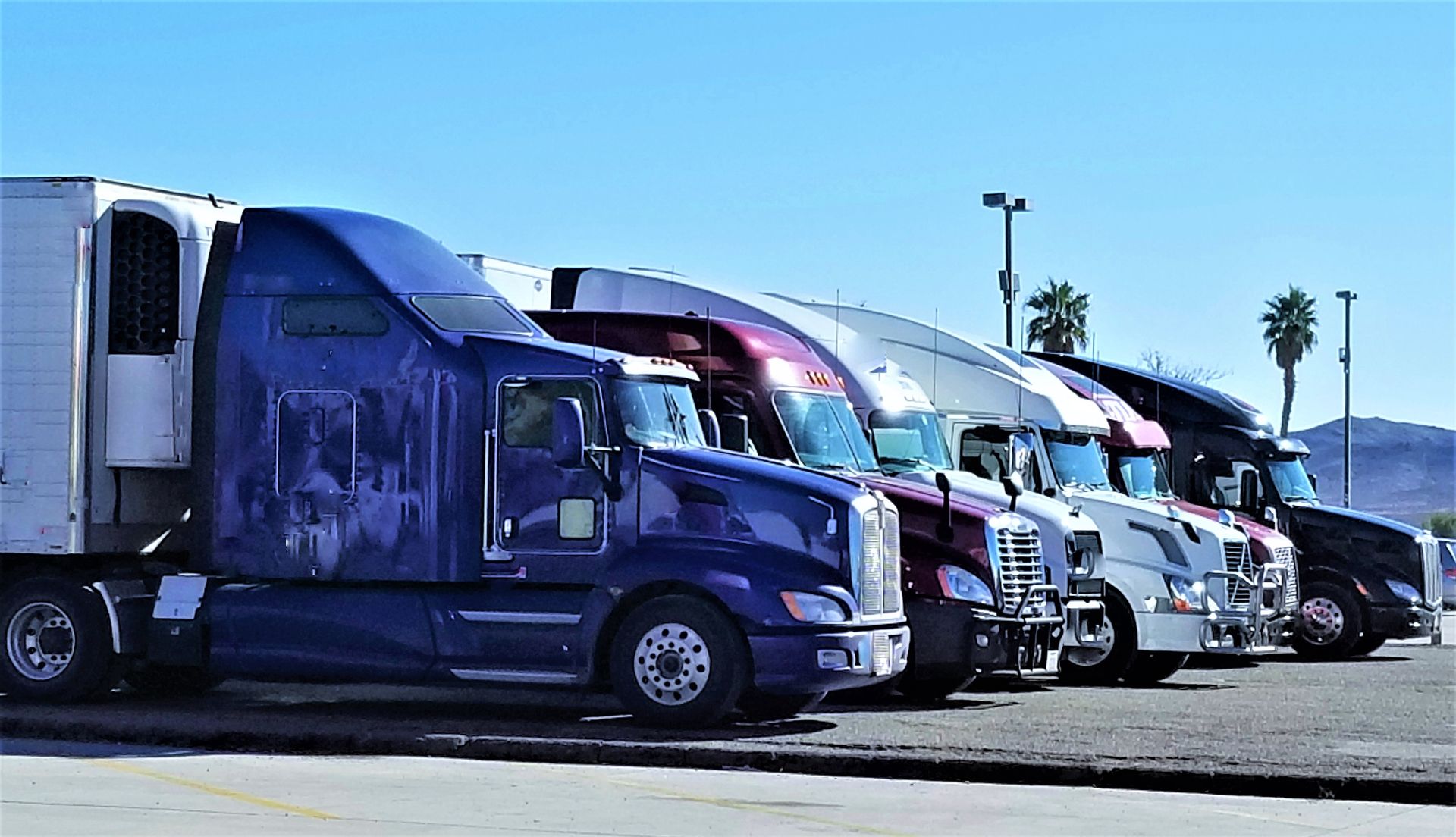
Protection for your fleet including box trucks, moving vans, and trailers. Covers liability, collision, physical damage, and hired or non-owned vehicles used in your operations.
Motor Truck Cargo
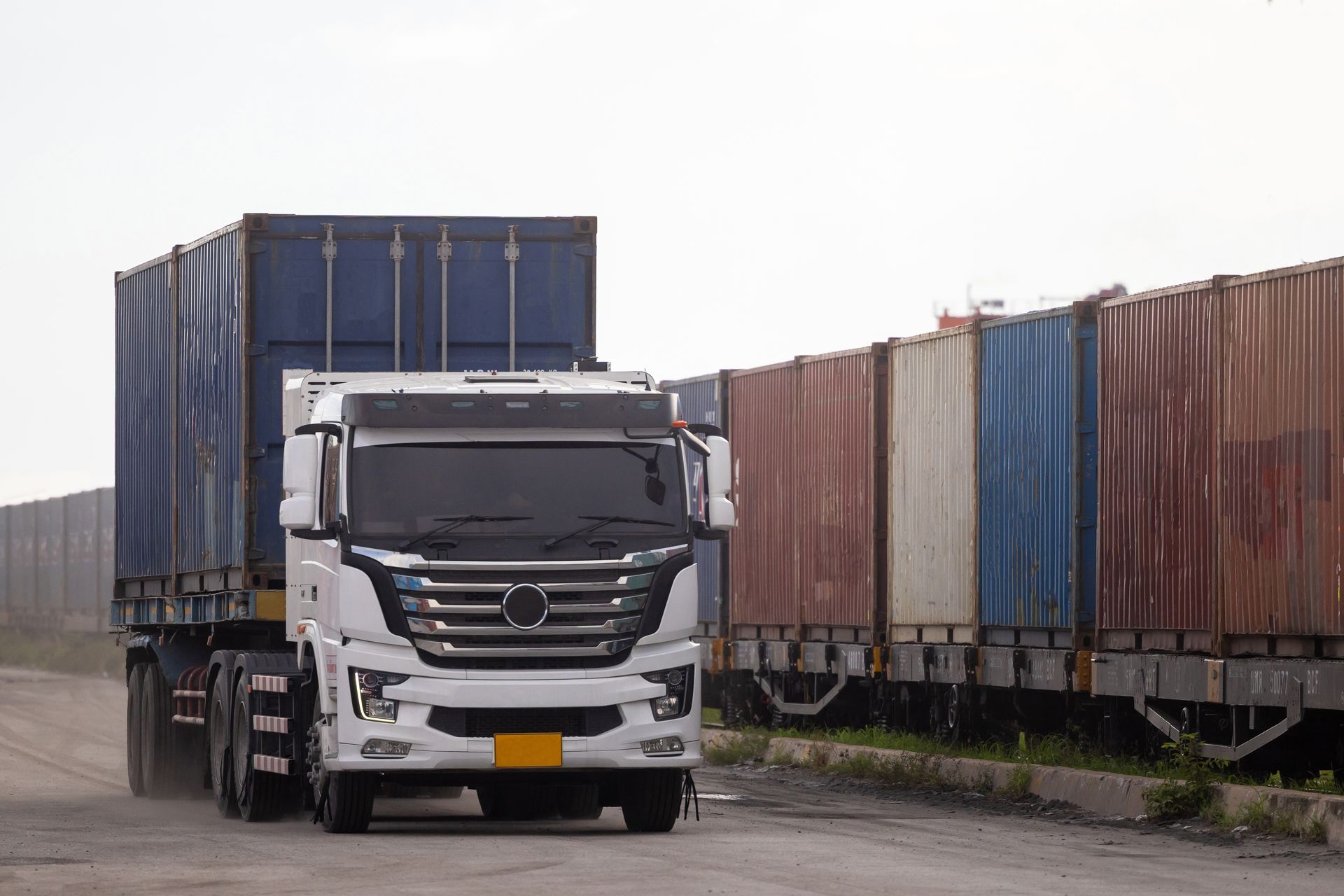
Covers household goods and freight during transport from pickup to delivery. Protects against damage, theft, mysterious disappearance, and weather-related losses while cargo is in your care.

General Liability
Protection from third-party claims for bodily injury and property damage at customer homes, job sites, and your own facility. Essential coverage for every transportation operation

Warehouse Legal Liability
Coverage for customer property while stored in your facility. Protects against damage, theft, fire, and water damage to goods in your care, custody, or control.

Workers' Compensation
Medical care and wage replacement for employees injured on the job. Required in most states for transportation and warehouse work where physical labor creates higher injury risk.

Umbrella & Excess Liability
Higher liability limits stacked on top of your primary policies. Helps meet large contract requirements and protects your business assets against major claims and lawsuits.
Specialized Knowledge
Industries We Protect
Focused coverage for transportation and logistics businesses

Simple and Clear
How Our Process Works
Our process to get you covered
Connect With Us
Reach out through our form or by phone to share your business needs and current coverage situation.
Get Coverage Options
We review your risks, compare carriers, and present clear quotes with plain-language explanations.
Stay Protected
You choose your plan, and we provide ongoing support for certificates, claims, and renewals.
Trusted by Businesses
Feedback That Reflects Service and Reliability
What our clients say about working with Champion Risk
Answers You Need
Frequently Asked Questions
Common questions about transportation and logistics insurance



What insurance does a transportation company need to operate legally?
Motor carriers that cross state lines must meet FMCSA requirements. You need a minimum of $750,000 in liability coverage, plus a BMC-91 filing that proves your insurance to the federal government. Cargo coverage is also required, with minimums that depend on the type of goods you transport.
Intrastate operators follow state-specific rules. California, Texas, and Florida each have different requirements. Champion Risk handles both federal and state filings. We make sure your coverage meets legal minimums and your certificates reach the right agencies.
How much does commercial transportation insurance cost?
Premiums depend on your fleet size, driving records, cargo values, and claims history. A small operation with two trucks might pay $8,000 to $15,000 per year. A larger carrier with ten trucks could pay $50,000 to $100,000 or more.
The best way to control costs is working with a broker who knows transportation insurance. We find carriers that specialize in your exact operation type. This often results in better rates than going direct or using a general agent who doesn't understand the industry.
What is a BMC-91 filing and why do I need one?
A BMC-91 is a form your insurance company files with the FMCSA. It proves you carry the required liability coverage to operate as a for-hire motor carrier. Without an active BMC-91, your operating authority can be revoked.
Champion Risk works with carriers who file electronically. Your BMC-91 typically posts within 24 to 48 hours of binding coverage. We monitor your filing status and alert you if anything needs attention.
Does my warehouse or storage facility need different insurance than a trucking operation?
Yes. Storage facilities need warehouse legal liability coverage. This protects you when customer property is damaged or stolen while in your care. Standard general liability policies exclude this exposure.
You may also need property coverage for your building, equipment breakdown protection, and business income coverage if a fire or disaster shuts down operations. Champion Risk builds storage facility programs that address all these risks in one package.
Can you insure last-mile delivery drivers who use their own vehicles?
Yes. We offer hired and non-owned auto coverage for delivery operations that use independent contractors or employees driving personal vehicles. This fills gaps that personal auto policies don't cover during commercial use.
We also provide occupational accident coverage for 1099 drivers who aren't eligible for workers' comp. This protects your drivers and limits your liability exposure when accidents happen.
How fast can I get proof of insurance for a new contract?
Same day in most cases. Once we bind your policy, we issue certificates of insurance within hours. If your contract requires specific additional insured language or special endorsements, we coordinate directly with the carrier.
Rush requests happen often in this industry. General contractors and corporate clients demand certificates before they let you on site. Champion Risk prioritizes fast turnaround because we know your revenue depends on it.
Answers You Need
Transportation & Logistics Insurance Resources
Articles designed to inform and support your business
Contact Us
Phone Number:
Email Address:
Location:
12264 El Camino Real, Suite 350
San Diego, CA 92130
Hours:
Monday – Friday: 8:00 AM – 6:00 PM PT