
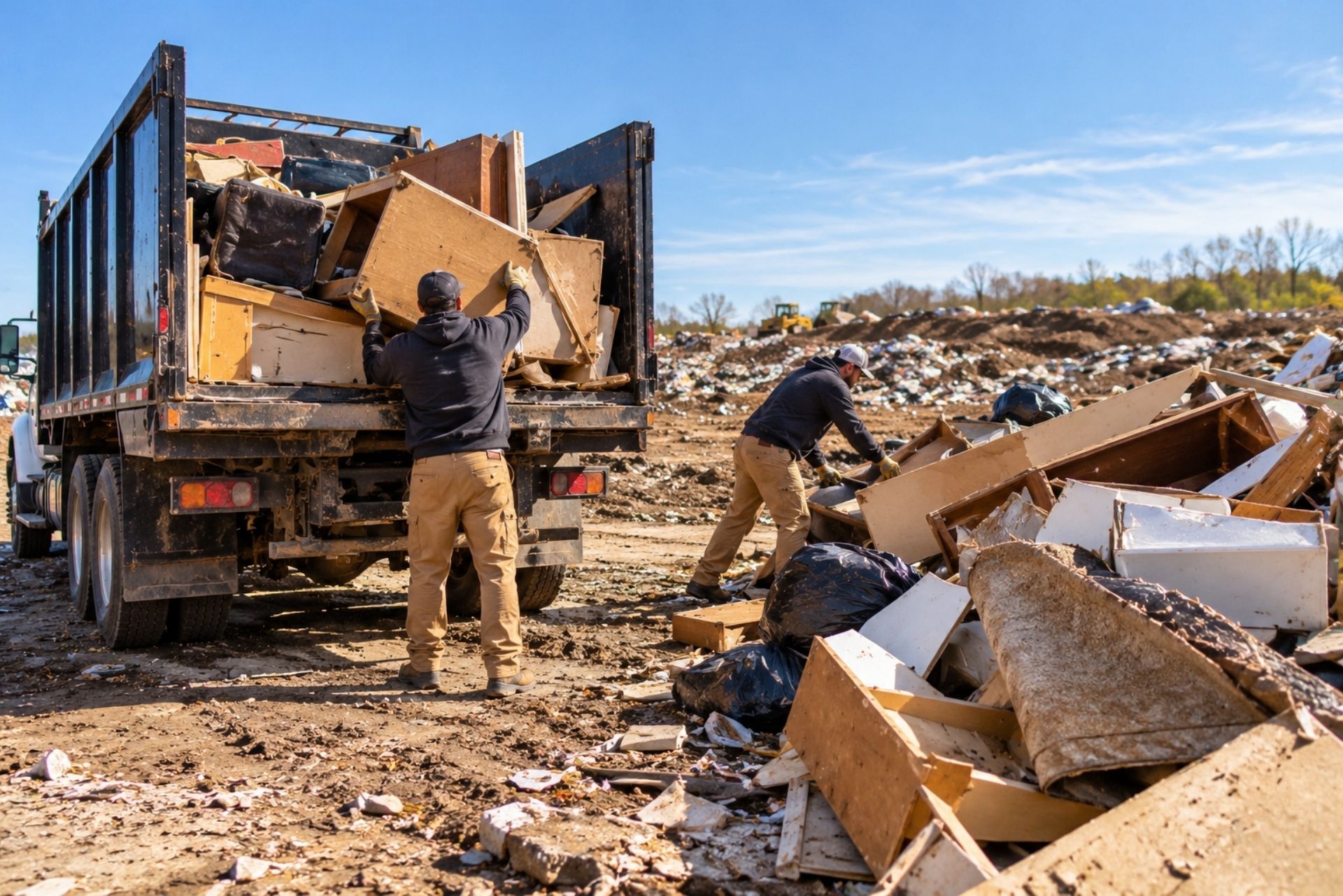
A crew of two backs a 16-foot box truck up a client's driveway to haul out a basement full of old furniture. On the third trip, a dresser slips off the dolly, gouges a strip of hardwood flooring, and punches a hole in the drywall at the bottom of the stairs. Later that afternoon, the truck clips a neighbor's mailbox on the way out. By evening, the client has emailed photos and a contractor's estimate for the floor.
That's one ordinary Tuesday, and it touches three different insurance policies. Junk removal looks simple from the outside: show up, lift, load, dump. The risk profile is more complicated than most owners realize until a claim lands. You're working inside other people's homes, driving heavy vehicles loaded with unpredictable cargo, asking employees to lift awkward weight all day, and taking responsibility for where that debris ends up.
This guide walks through
junk removal business insurance piece by piece: general liability, commercial auto, damage to customer property, disposal exposure, workers' compensation, and what it all tends to cost. The goal is to help you spot the gaps before a client, a regulator, or an injured worker finds them for you.
Why Junk Removal Businesses Need Specialized Insurance
Most new haulers start with whatever policy their agent quotes fastest, usually a generic contractor or "general services" package. That's where trouble begins. Junk removal sits at the intersection of several industries: moving, waste hauling, light demolition, and cleaning. A policy written for a landscaper or handyman rarely accounts for all of them.
Think about what a typical job involves. You might remove a hot tub from a backyard deck, clear out an estate with unknown chemicals under the sink, tear down a shed, and haul everything to three different facilities. Each step carries a distinct exposure. Generic policies often contain classification problems, where your business is rated under the wrong code, which can give a carrier grounds to deny or reduce a claim later.
The market itself adds pressure. One small hauler put it bluntly in an industry interview: insurance for waste haulers is almost impossible in some states, with only a few carriers willing to write the business and charging what they like. Junk removal operators don't always get lumped in with full waste haulers, but the overlap is enough that underwriters look closely at what you carry and where it goes.
Specialized coverage means policies built around your actual operations, with the right class codes, endorsements for hauling and disposal, and limits that match the contracts you sign. Commercial property managers and general contractors increasingly require
certificates of insurance with specific limits and additional insured wording before you ever step on site. If your coverage can't produce that paperwork, you lose the job.

By: Mark Raby
Chief Executive Officer at Champion Risk & Insurance Services
General Liability and Protecting Customer Property
General liability (GL) is the foundation. It responds when your business causes bodily injury to someone outside your company or damages property that belongs to someone else. For a junk removal company, that "someone else" is usually the customer, their neighbor, or a building owner.
Damage to Client Homes and Commercial Spaces
Property damage claims are the bread and butter of junk removal losses. Scraped floors, dented door frames, cracked tiles, broken banisters, and torn carpet show up constantly. Commercial jobs add elevators with scratched panels, damaged loading dock equipment, and busted sprinkler heads in tight hallways.
Here's a nuance many owners miss: GL policies often include a "care, custody, and control" exclusion. If the damaged item was in your possession at the time, like an antique the client actually wanted to keep that got mixed into the load, a standard GL policy may refuse the claim. Some carriers offer endorsements that buy back limited coverage for property you're handling. Ask about it specifically, because it won't be there by default.
Documentation protects you as much as the policy does. Before lifting anything, have the crew take timestamped photos or a quick walkthrough video of floors, walls, stairwells, and doorways along the path out. A signed work order noting pre-existing damage stops a lot of inflated or fraudulent claims before they start.
Bodily Injury Risks During Heavy Lifting
Your crew isn't the only group at risk of injury. A homeowner trips over a hose you left across the walkway. A tenant gets hit by a falling box while you're loading from a second-floor balcony. A child wanders behind the truck while the liftgate is down. These are third-party bodily injury claims, and they can run far higher than a damaged floor once medical bills and legal fees enter the picture.
Multi-story cleanouts carry their own rules. OSHA standards
require enclosed chutes when material is dropped more than 20 feet to a point outside a building's exterior walls. If your crew skips that on a renovation cleanout and debris injures someone below, expect the claim to be messy and the citation to follow.
Commercial Auto and Disposal Exposure Risks
Your trucks are your most expensive and most dangerous assets. Personal auto policies exclude business use, so the moment a vehicle is hauling paid loads, you need commercial auto coverage. If employees ever drive their own vehicles for work, even to pick up supplies, add hired and non-owned auto coverage too.
The Hazards of Transporting Debris and Hazardous Waste
Loaded junk trucks are top-heavy, often over-stacked, and prone to shifting cargo. Unsecured loads that spill onto highways cause windshield claims at a minimum and serious multi-vehicle accidents at worst. Many states fine haulers for unsecured loads, and a single dropped mattress on an interstate can turn into a liability claim from every driver who swerved.
Then there's what's actually in the load. Customers rarely tell you about half-empty paint cans, old pool chemicals, propane cylinders, motor oil, or fluorescent tubes buried in a garage cleanout. Some of these are regulated hazardous materials. If they leak or ignite in transit, standard commercial auto policies may not respond to the cleanup.
Driver quality drives everything here. Carriers check motor vehicle records closely, and one driver with a recent DUI or multiple at-fault accidents can push your premium up sharply or get the account declined. A brokerage like Champion Risk can help you set written driver eligibility standards and build a training program that underwriters actually give credit for.
Pollution Liability and Environmental Cleanup Costs
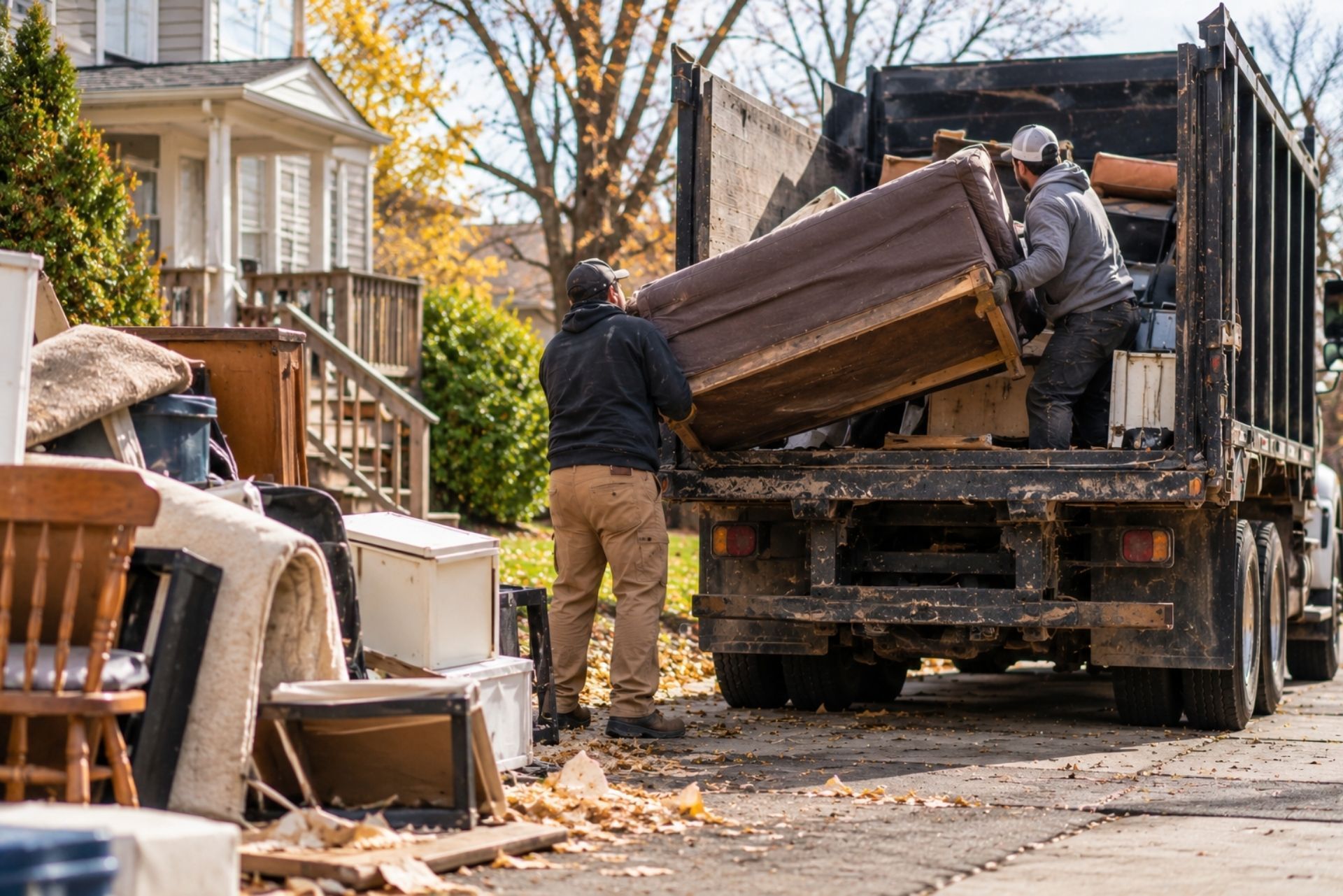
This is the gap that catches the most junk removal owners off guard. Standard general liability policies almost universally exclude pollution, which leaves haulers exposed during the disposal process. Spilled fluids, contaminated soil, and improperly dumped materials fall squarely into that exclusion.
A March 2026 federal ruling made the risk concrete. In Great West Cas. Co. v. Ryan VanFleet, the court held that a standard CGL policy does not cover remediation costs for illegal dumping of debris. If a subcontractor or employee dumps a load somewhere they shouldn't, and the property owner or state demands cleanup, your GL policy likely won't pay.
Regulators are also changing how waste gets tracked. The EPA is moving to a
fully electronic e-Manifest system for hazardous waste, which makes the paper trail on regulated materials easier to follow back to whoever handled them. Contractors pollution liability (CPL) and transportation pollution endorsements fill this hole. Keep your disposal receipts organized by job, too, because proof of proper disposal is your best defense.
Workers' Compensation and Employee Safety
Junk removal is physically punishing work. Back strains, hernias, crushed fingers, knee injuries on stairs, cuts from broken glass and sharp metal, and the occasional fall from a truck bed are routine. Workers' compensation pays medical bills and lost wages for injured employees, and in most states it's legally required once you have even one employee.
The biggest mistake I see is misclassification. Owners pay crew members as 1099 contractors to avoid comp premiums, assuming that's legal because the workers agreed to it. State labor departments and comp auditors look at how the work is controlled, not what the paperwork says. If you set the schedule, provide the truck, and tell them how to do the job, they're probably employees. When one of them gets hurt, you could face the full medical bill plus penalties.
Premium audits are the other surprise. Comp is priced on payroll, estimated upfront, then audited at year end. If you hired three seasonal helpers for spring cleanout season and didn't update your carrier, expect a bill for the difference.
Safety practices directly affect your experience modification rate, which follows your business for years. A few habits that pay off:
- Two-person lift rule for anything over a set weight or awkward shape, like appliances and pianos
- Required gloves, boots, and eye protection on every job, not just demo work
- Pre-job hazard check for sharp objects, mold, needles in hoarding cleanouts, and unstable floors
- Proper dolly and strap use instead of carrying items down stairs by hand
- Prompt injury reporting
so small strains don't turn into large, late claims
Comparing Coverage: Basic vs. Comprehensive Plans
Plenty of owners start with a bare-minimum package to win their first contracts. That works until a job outgrows it. The table below shows how a basic setup compares to a more complete program for a typical small-to-midsize junk removal company.
| Coverage Area | Basic Plan | Comprehensive Plan |
|---|---|---|
| General liability | Standard limits, standard exclusions | Higher limits, additional insured endorsements, care-custody buyback |
| Commercial auto | Liability only on owned trucks | Liability, physical damage, hired and non-owned auto |
| Customer property | Damage to home structure only | Includes items in your care during removal |
| Pollution | Excluded | Contractors pollution and transit pollution coverage |
| Workers' comp | State minimum | Includes employer's liability with higher limits |
| Umbrella | None | Extra limits above GL, auto, and employer's liability |
| Equipment | Not covered | Inland marine for dollies, tools, trailers, dumpsters |
| Contract eligibility | Residential jobs | Commercial, property management, and municipal work |
The basic plan isn't wrong for a solo operator doing small residential pickups. The catch is that the gaps sit exactly where the expensive claims happen: pollution, items in your care, and big auto losses that blow past primary limits.
An umbrella policy deserves special mention. A serious truck accident can produce damages well beyond standard auto limits, and an umbrella is usually one of the cheaper ways to add meaningful protection. If you run roll-off containers or trailers, inland marine coverage for that equipment protects against theft and damage that neither auto nor GL will touch.
Understanding the Costs of Junk Removal Policies
There's no single price for a junk removal insurance program, and anyone quoting a flat figure without asking about your trucks, drivers, and payroll is guessing. Costs swing widely based on location, fleet size, and what you haul. What I can give you is a clear picture of what moves the number up or down.
Factors That Influence Your Annual Premiums
Underwriters build a premium around a handful of variables:
- Number and type of vehicles. A pickup with a trailer rates very differently than a fleet of box trucks or roll-off haulers.
- Driver records. Accidents, violations, and young or inexperienced drivers all raise auto costs.
- Payroll. Workers' comp is calculated per hundred dollars of payroll, so headcount and wages matter directly.
- Claims history. Three years of clean loss runs is one of the strongest negotiating tools you have.
- Scope of services. Light demolition, hoarding cleanouts, construction debris, or anything involving hazardous materials raises your risk profile.
- State and territory. Litigation climate, comp rules, and carrier appetite vary heavily by state, and some areas have very few carriers writing hauling risks at all.
- Limits and deductibles. Higher limits cost more, and higher deductibles lower premium but raise your out-of-pocket on each claim.
Commercial auto is usually the largest line item for fleet operators. Workers' comp often comes second once you employ more than a couple of crew members.
Ways to Lower Insurance Costs Without Losing Coverage
Cutting coverage to save money is easy. Saving money while staying protected takes more work, but it's doable:
- Pay-in-full discounts from carriers that offer them
- Telematics and dashcams in trucks, which give underwriters data and help you fight disputed accident claims
- Formal driver hiring standards with MVR checks before anyone gets keys
- Written safety program with documented training sessions
- Accurate class codes and payroll estimates to avoid audit surprises
- Bundling lines with one carrier or through one program where it makes sense
- Raising deductibles on physical damage for older trucks you could replace yourself
Shopping through an independent broker helps too, since they can approach multiple specialty markets instead of one carrier's rate sheet. Champion Risk works with high-risk transportation and hauling operations and can run a risk audit that shows underwriters you take loss control seriously.
Common Questions About Junk Removal Insurance
Do I need insurance if I'm just a one-person operation with a pickup truck? Yes. You still need commercial auto, since personal policies exclude business use, and general liability to cover damage at customer sites. Workers' comp may not be required for a sole owner in many states, but rules vary.
Does general liability cover me if a customer's stuff breaks while I'm moving it? Often not. Many GL policies exclude property in your care, custody, or control, so ask about an endorsement that covers items you're handling.
What happens if hazardous materials leak from my truck? Standard GL and auto policies usually exclude pollution cleanup. You'd need pollution liability coverage, ideally one that includes transportation.
Can I hire crew as independent contractors to skip workers' comp? It's risky. States judge employment by how much control you have over the work, and misclassified workers can leave you paying claims and penalties directly.
How much do I need for a commercial property management contract? It depends on the contract, but property managers commonly require specific GL and auto limits plus additional insured status. Read the insurance section of the contract before you sign and send it to your broker.
What deductible should I choose? Pick an amount you could pay from cash on hand without hurting operations. A higher deductible lowers premium, but frequent small claims can make it costly.
Making the Right Choice for Your Fleet and Crew
The right coverage for a junk removal company comes from mapping each part of your workday to a policy. Customer sites need general liability with an eye on items in your care. Trucks need commercial auto that matches how loaded and how far they travel. Your crew needs properly classified workers' comp. And disposal, the step most owners never think about, needs pollution coverage, because the 2026 court ruling showed standard GL won't pay to clean up a dumping mess.
Start by pulling your current policies and checking for the pollution exclusion and the care, custody, and control wording. Then list every vehicle, driver, and service you actually offer, including the occasional demo job you take on the side. Gaps tend to live in those side jobs.
If you'd like a second set of eyes, Champion Risk can review your current program, structure coverage around how your business really runs, and help build the driver and safety programs underwriters reward. The best time to find a coverage gap is before the dresser slips.
About the Author:
Mark Raby
I am a seasoned insurance professional with over 30 years of experience in the industry. I lead Champion Risk & Insurance Services, a San Diego-based brokerage with nationwide reach and strong influence in the insurance marketplace. My core competencies include insurance agency M&A deals, captives and alternative risk structures, and commercial property and casualty insurance for clients in the transportation and logistics industries. I am a former president of IIAB San Diego and hold a Bachelor of Science in Finance from Western Michigan University’s Haworth College of Business.
Protection for Transportation Operations
Business Insurance for Transportation & Logistics Companies
Coverage designed specifically for transportation businesses
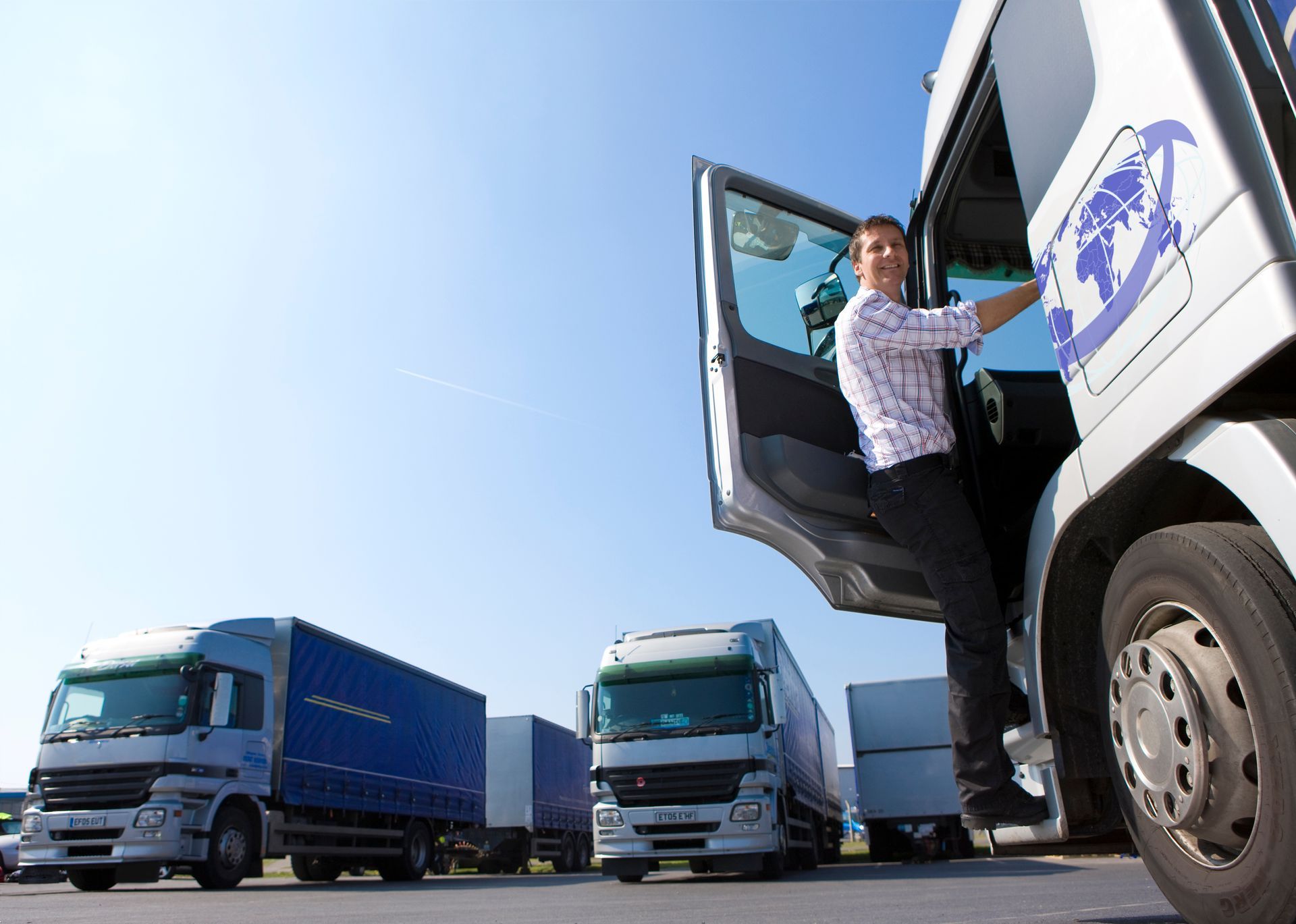
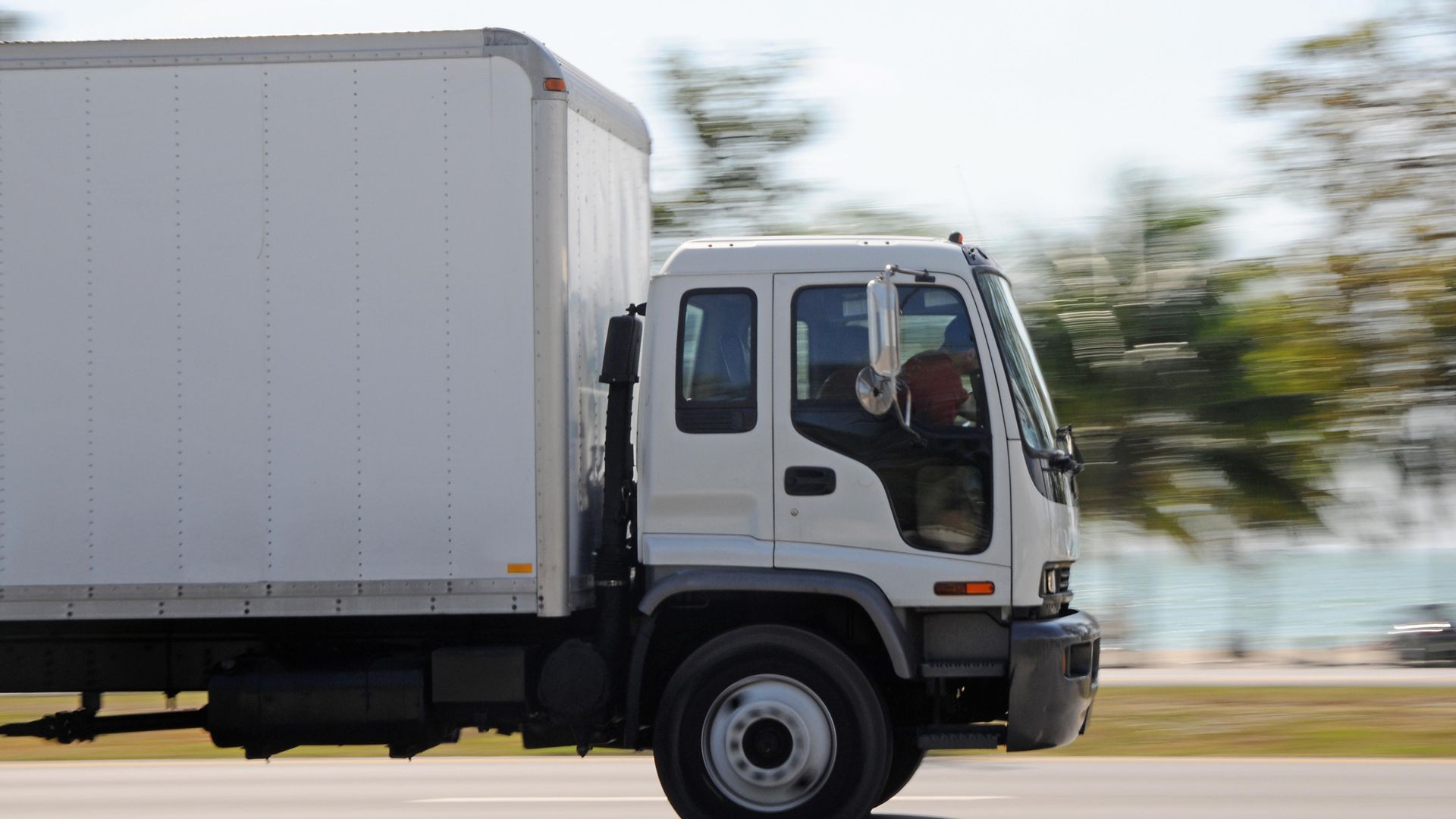
Commercial Auto & Trucking
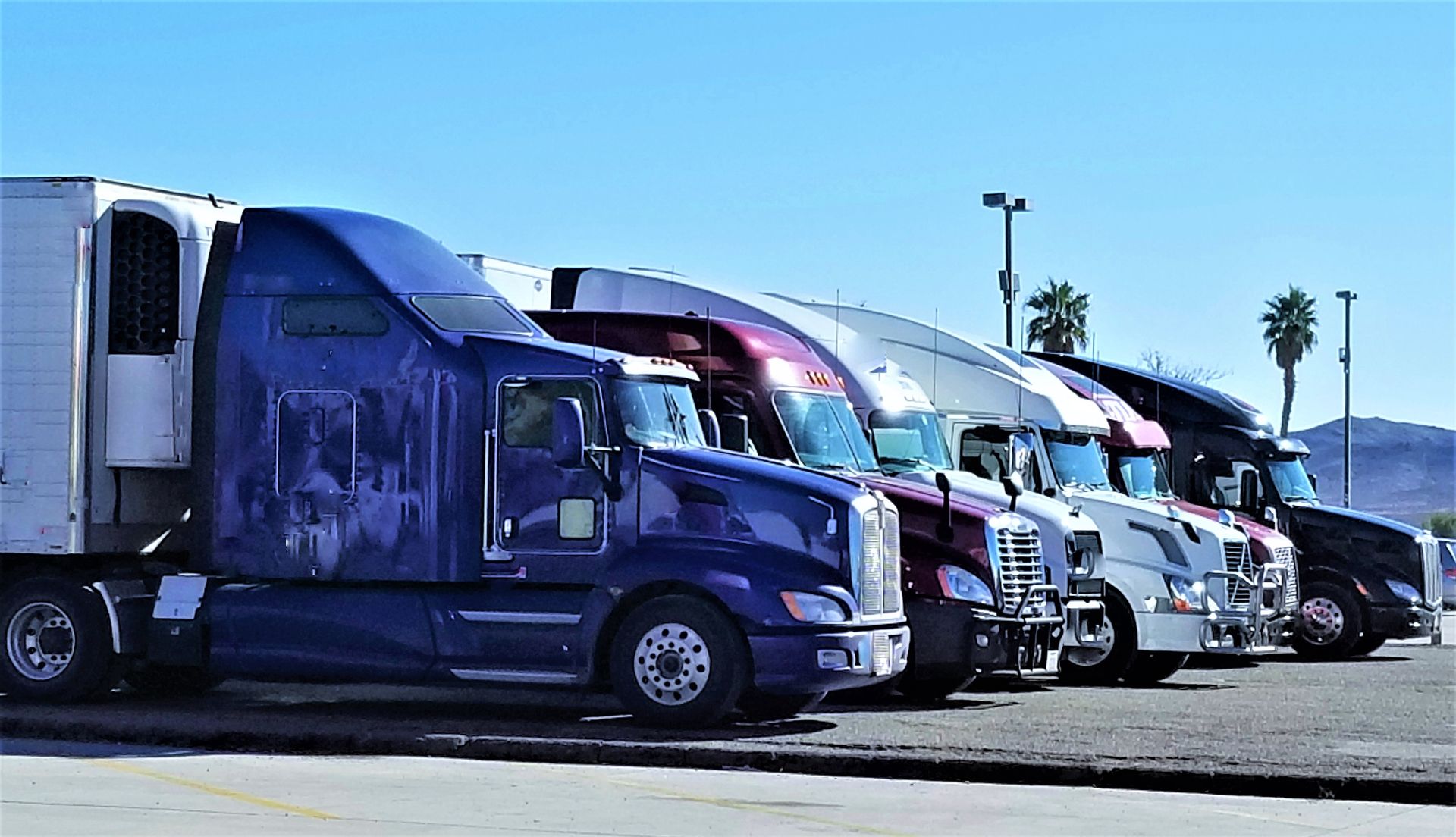
Protection for your fleet including box trucks, moving vans, and trailers. Covers liability, collision, physical damage, and hired or non-owned vehicles used in your operations.
Motor Truck Cargo
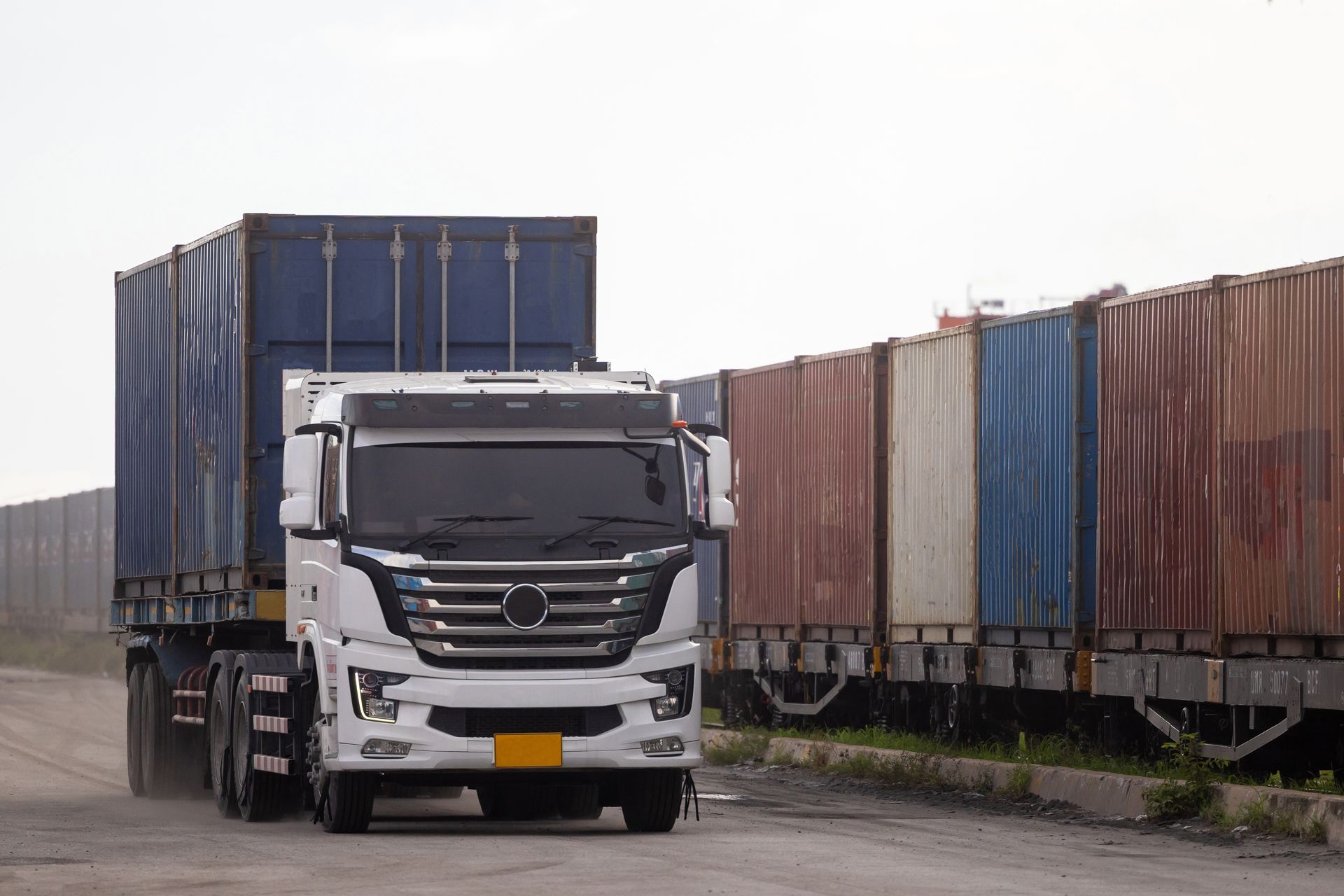
Covers household goods and freight during transport from pickup to delivery. Protects against damage, theft, mysterious disappearance, and weather-related losses while cargo is in your care.

General Liability
Protection from third-party claims for bodily injury and property damage at customer homes, job sites, and your own facility. Essential coverage for every transportation operation
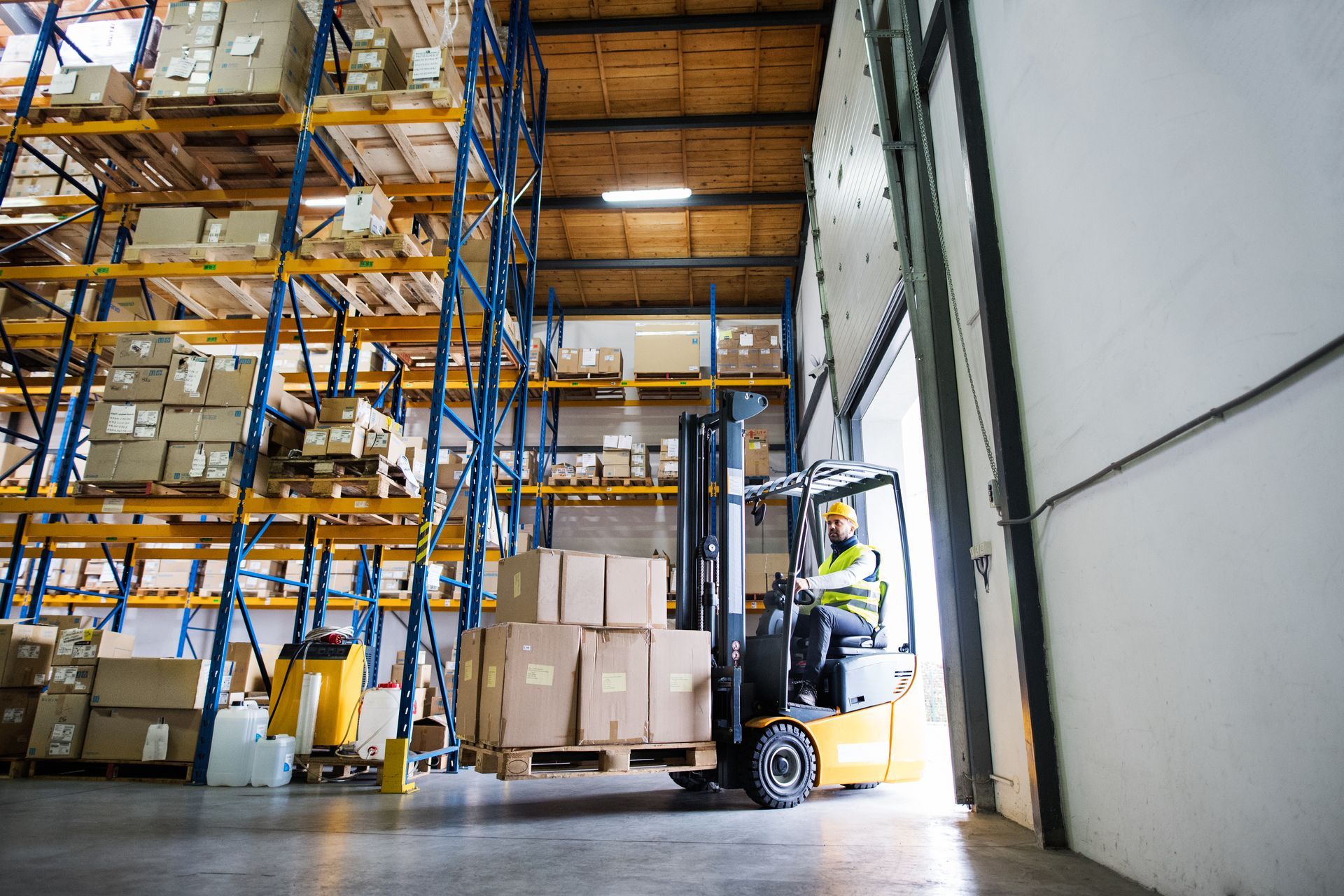
Warehouse Legal Liability
Coverage for customer property while stored in your facility. Protects against damage, theft, fire, and water damage to goods in your care, custody, or control.

Workers' Compensation
Medical care and wage replacement for employees injured on the job. Required in most states for transportation and warehouse work where physical labor creates higher injury risk.

Umbrella & Excess Liability
Higher liability limits stacked on top of your primary policies. Helps meet large contract requirements and protects your business assets against major claims and lawsuits.
Specialized Knowledge
Industries We Protect
Focused coverage for transportation and logistics businesses
Simple and Clear
How Our Process Works
Our process to get you covered
Connect With Us
Reach out through our form or by phone to share your business needs and current coverage situation.
Get Coverage Options
We review your risks, compare carriers, and present clear quotes with plain-language explanations.
Stay Protected
You choose your plan, and we provide ongoing support for certificates, claims, and renewals.
Trusted by Businesses
Feedback That Reflects Service and Reliability
What our clients say about working with Champion Risk
Answers You Need
Frequently Asked Questions
Common questions about transportation and logistics insurance



What insurance does a transportation company need to operate legally?
Motor carriers that cross state lines must meet FMCSA requirements. You need a minimum of $750,000 in liability coverage, plus a BMC-91 filing that proves your insurance to the federal government. Cargo coverage is also required, with minimums that depend on the type of goods you transport.
Intrastate operators follow state-specific rules. California, Texas, and Florida each have different requirements. Champion Risk handles both federal and state filings. We make sure your coverage meets legal minimums and your certificates reach the right agencies.
How much does commercial transportation insurance cost?
Premiums depend on your fleet size, driving records, cargo values, and claims history. A small operation with two trucks might pay $8,000 to $15,000 per year. A larger carrier with ten trucks could pay $50,000 to $100,000 or more.
The best way to control costs is working with a broker who knows transportation insurance. We find carriers that specialize in your exact operation type. This often results in better rates than going direct or using a general agent who doesn't understand the industry.
What is a BMC-91 filing and why do I need one?
A BMC-91 is a form your insurance company files with the FMCSA. It proves you carry the required liability coverage to operate as a for-hire motor carrier. Without an active BMC-91, your operating authority can be revoked.
Champion Risk works with carriers who file electronically. Your BMC-91 typically posts within 24 to 48 hours of binding coverage. We monitor your filing status and alert you if anything needs attention.
Does my warehouse or storage facility need different insurance than a trucking operation?
Yes. Storage facilities need warehouse legal liability coverage. This protects you when customer property is damaged or stolen while in your care. Standard general liability policies exclude this exposure.
You may also need property coverage for your building, equipment breakdown protection, and business income coverage if a fire or disaster shuts down operations. Champion Risk builds storage facility programs that address all these risks in one package.
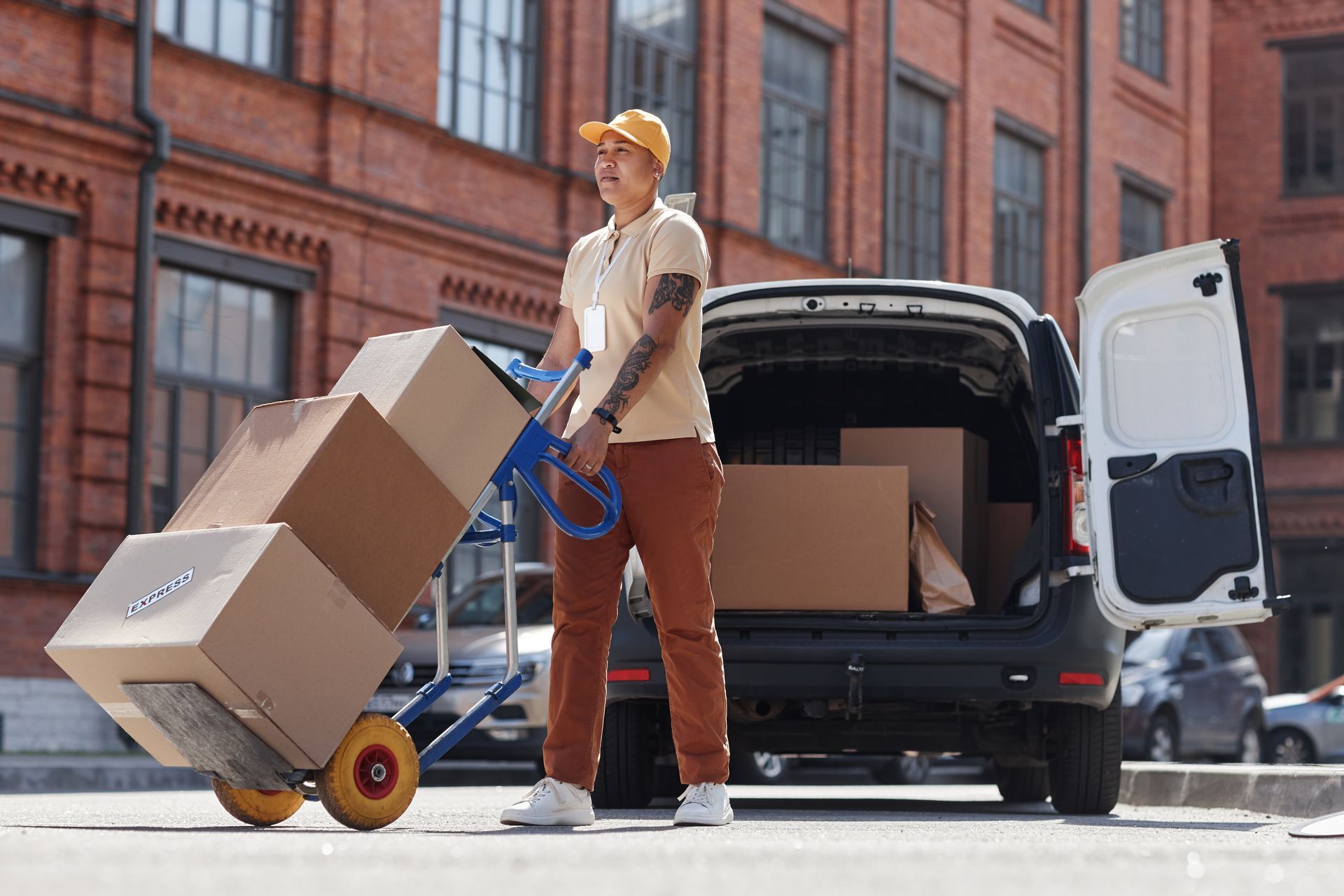
Can you insure last-mile delivery drivers who use their own vehicles?
Yes. We offer hired and non-owned auto coverage for delivery operations that use independent contractors or employees driving personal vehicles. This fills gaps that personal auto policies don't cover during commercial use.
We also provide occupational accident coverage for 1099 drivers who aren't eligible for workers' comp. This protects your drivers and limits your liability exposure when accidents happen.
How fast can I get proof of insurance for a new contract?
Same day in most cases. Once we bind your policy, we issue certificates of insurance within hours. If your contract requires specific additional insured language or special endorsements, we coordinate directly with the carrier.
Rush requests happen often in this industry. General contractors and corporate clients demand certificates before they let you on site. Champion Risk prioritizes fast turnaround because we know your revenue depends on it.
Answers You Need
Transportation & Logistics Insurance Resources
Articles designed to inform and support your business
Contact Us
Phone Number:
Email Address:
Location:
12264 El Camino Real, Suite 350
San Diego, CA 92130
Hours:
Monday – Friday: 8:00 AM – 6:00 PM PT