See How We're Different
Call Us: (800) 829-0807
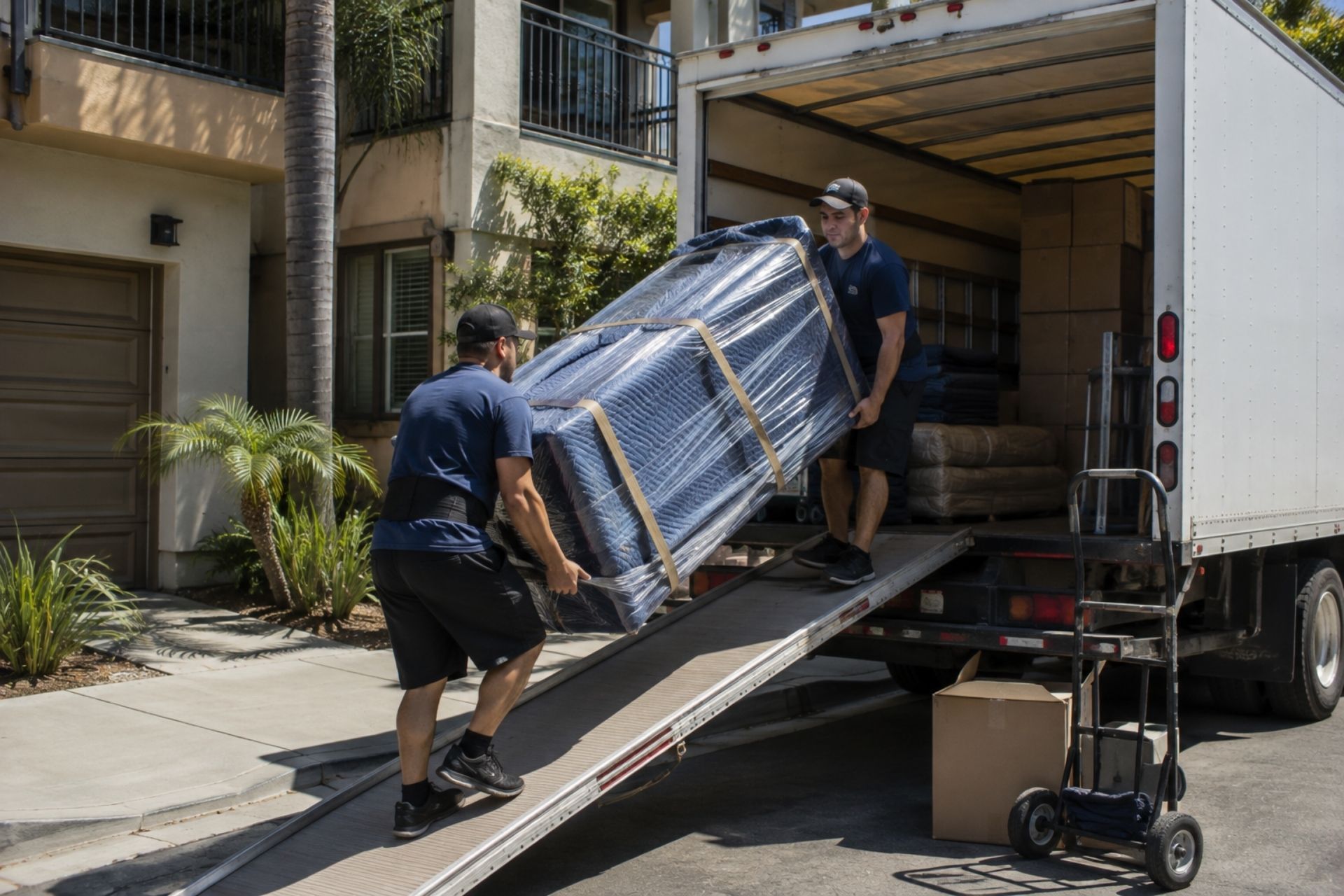
A mover lifts a 200-pound armoire, feels something pop in his lower back, and suddenly your business faces a $45,000 medical claim. This scenario plays out constantly across the moving and storage industry, where approximately one in 42 workers suffers an injury each year according to Motor Transport. The physical demands of hauling furniture up narrow staircases, loading trucks in tight spaces, and operating forklifts in warehouses create a perfect storm of injury risk.
Workers' compensation insurance isn't optional for most moving and storage companies. It's a legal requirement in nearly every state, and beyond compliance, it's the financial barrier between a single workplace injury and business-ending liability. The good news? Premium costs have actually dropped significantly over the past few years. A $35,000 workers' comp premium from 2020 would cost approximately $26,200 today, representing a 25% decrease. Understanding how coverage works, what drives costs, and how to manage your policy effectively can save your company thousands annually while keeping your crew protected.
Essential Workers' Compensation Coverage for Moving & Storage Businesses
Workers' compensation functions as a trade-off. Employees give up the right to sue their employer for workplace injuries. In exchange, they receive guaranteed benefits regardless of who caused the accident. For moving companies, this arrangement is particularly valuable given how easily injuries occur during normal operations.
Medical Expenses and Rehabilitation Costs
When a crew member gets hurt on the job, workers' comp covers all reasonable medical treatment. This includes emergency room visits, surgery, prescription medications, physical therapy, and any specialized care needed for recovery. For moving company injuries, you're typically looking at back strains, herniated discs, knee damage, and shoulder injuries that require extensive rehabilitation.
The coverage extends beyond immediate treatment. If an employee needs ongoing care, modified equipment, or multiple surgeries over several years, workers' comp handles those expenses. One industry expert notes that "moving furniture is a physically demanding job with inherent injury risks, and better moving companies manage this risk through safety training and workers' compensation insurance."
Disability Benefits and Lost Wages
Injured workers can't earn their regular income while recovering. Workers' comp provides wage replacement benefits, typically covering 60-70% of the employee's average weekly wage up to state-mandated caps. These payments continue until the worker returns to full duty, reaches maximum medical improvement, or qualifies for permanent disability benefits.
The coverage distinguishes between temporary and permanent disabilities. A mover who breaks an ankle might receive temporary total disability payments for three months. Someone who suffers a career-ending spinal injury could receive permanent partial or total disability benefits for years.
Employer Liability Protection
The exclusive remedy provision in workers' comp law generally prevents employees from suing you for workplace injuries. This protection is worth its weight in gold. Without it, a single serious injury lawsuit could easily exceed $500,000 in legal fees and damages.
Employer liability coverage within your workers' comp policy also protects against certain claims that fall outside standard workers' comp, such as third-party lawsuits or claims alleging gross negligence. Champion Risk works with moving companies to ensure these liability gaps don't leave businesses exposed.
Understanding State Requirements and Compliance
Every state except Texas mandates workers' compensation coverage for most employers, but the specific requirements vary dramatically. Some states require coverage with just one employee. Others set the threshold at three, four, or five workers.
Employee vs. Independent Contractor Classifications
This is where moving companies frequently get into trouble. Misclassifying employees as independent contractors to avoid workers' comp requirements can result in severe penalties, back taxes, and personal liability for any injuries that occur. State auditors actively investigate the moving industry because misclassification is so common.
The classification depends on behavioral control, financial control, and the relationship type. If you set schedules, provide equipment, and control how work gets done, those workers are employees regardless of what your contract says. Getting this wrong doesn't just create legal problems. It leaves you personally liable for medical expenses if an uninsured worker gets hurt.
State-Specific Mandates for the Moving Industry
California requires coverage for all employers with one or more employees. Florida mandates coverage for construction employers with one employee but sets the threshold at four employees for non-construction businesses. New York requires coverage for virtually all employers and has seen warehouse worker injuries increase 30% from 2022 to 2023, reaching 11.5 injuries per 100 full-time workers.
Some states operate monopolistic state funds where you must purchase coverage through a state agency. Others allow private insurance markets. Understanding your state's specific requirements prevents compliance violations that can shut down operations.
Factors Influencing Workers' Comp Costs for Movers
Your premium isn't arbitrary. Insurance carriers calculate it based on several measurable factors that reflect your actual risk profile.
Class Codes: 8293 Storage vs. 8292 Moving
Insurance companies assign class codes based on the type of work performed. Moving operations typically fall under NCCI code 8292, which carries higher rates because the work involves more physical handling and vehicle operation. Storage operations often use code 8293, which generally has lower rates because warehouse work, while still physical, involves less constant lifting and vehicle exposure.
| Factor | Moving Operations (8292) | Storage Operations (8293) |
|---|---|---|
| Base Rate | Higher | Lower |
| Primary Risks | Lifting injuries, vehicle accidents | Forklift incidents, falls |
| Typical Premium per $100 payroll | $8-15 | $4-8 |
Companies performing both services need proper classification for each operation. Misclassification can lead to audit adjustments and back-payments.
The Role of Experience Modification Rates (MOD Factors)
Your experience modification rate compares your claims history against similar businesses in your industry. A MOD of 1.0 means you're average. Below 1.0 means you're safer than average and qualify for premium discounts. Above 1.0 means you're riskier and pay more.
This number directly multiplies your base premium. A company with a 0.85 MOD pays 15% less than average. A company with a 1.25 MOD pays 25% more. One serious claim can elevate your MOD for three years, making claims prevention extremely valuable financially.
Annual Payroll and Claims History
Your premium is calculated as a rate per $100 of payroll. Higher payroll means higher premiums, but this reflects the increased exposure from more work hours. Claims history affects both your MOD factor and your ability to obtain coverage from preferred carriers.
Companies with poor claims histories may find themselves limited to assigned risk pools or high-risk carriers, paying significantly more than competitors with clean records. Champion Risk helps moving companies analyze their claims patterns and implement changes that improve their risk profile over time.
Strategies to Reduce Premiums and Improve Safety
Premium reduction starts with genuine safety improvements, not paperwork exercises. Carriers reward companies that demonstrate lower actual risk.
Implementing Proper Lifting and Equipment Training
Back injuries account for a huge portion of moving company claims. Proper lifting technique training, when actually enforced on job sites, reduces these injuries substantially. Equally important is equipment training, including dollies, straps, ramps, and lift gates.
The transportation sector data shows that 94% of the 280 deaths from work-related injuries between 2007 and 2012 involved vehicles. Driver training and vehicle safety protocols deserve as much attention as lifting techniques. Pre-trip inspections, defensive driving courses, and clear loading procedures all reduce claims.
Document everything. Training records, safety meeting attendance, equipment inspections, and incident reports all demonstrate your commitment to safety during audits and renewals.
Return-to-Work Programs for Injured Crew Members
Getting injured employees back to work quickly, even in modified duty roles, dramatically reduces claim costs. Someone answering phones or doing inventory while recovering costs far less than someone sitting home collecting full disability benefits.
Effective return-to-work programs require advance planning. Identify light-duty positions before injuries occur. Communicate with treating physicians about work restrictions. Make modified duty genuinely productive so employees feel valued rather than sidelined.
Navigating the Insurance Audit and Renewal Process
Every workers' comp policy includes an audit provision. At policy end, the carrier reviews your actual payroll records and compares them to your estimates. Underestimating payroll results in additional premium owed. Overestimating generates a refund.
Keep payroll records organized by class code throughout the year. Separate administrative staff from moving crews and warehouse workers. This documentation makes audits smoother and ensures you're not overpaying for lower-risk positions.
Renewal is your opportunity to shop coverage and negotiate rates. Start the process 60-90 days before expiration. Gather updated payroll projections, claims summaries, and documentation of any safety improvements. Multiple quotes create leverage for negotiation.
Frequently Asked Questions
How quickly must I report a workplace injury? Most states require reporting within 24-72 hours. Delayed reporting can result in claim denials and penalties.
Can I exclude myself as an owner from workers' comp coverage? Many states allow sole proprietors and partners to opt out, but this leaves you personally uninsured for work injuries. Corporate officers have different rules depending on the state.
What happens if an employee is injured while driving between job sites? These injuries are typically covered since travel between work locations is considered work-related activity.
Does workers' comp cover injuries during lunch breaks? Generally no, unless the employee was performing work duties or was on the employer's premises.
How do seasonal workers affect my premium? You pay based on actual payroll, so seasonal fluctuations are captured in your year-end audit adjustment.
Making the Right Coverage Decision
Workers' compensation for moving and storage companies isn't just a compliance checkbox. It's financial protection for both your employees and your business. The industry's physical demands make injuries inevitable over time, and proper coverage ensures those incidents don't become company-ending events.
Focus on accurate employee classification, proper class codes, and genuine safety improvements rather than just shopping for the lowest premium. The cheapest policy often comes with poor claims handling that costs more in the long run. Champion Risk specializes in helping moving and storage companies find the right balance between coverage quality and premium cost. Contact their team to review your current policy and identify opportunities for better protection at competitive rates.

By: Mark Raby
Chief Executive Officer at Champion Risk & Insurance Services
Recent Posts